
Dental Crowns – Lincoln, NE
Protect Your Teeth with Durable, Lifelike Dental Crowns
Whether you have a tooth with a large area of decay or a cracked or broken tooth, durable, lifelike dental crowns can help you restore their appearance and function. These discreet restorations both look and feel like real teeth, so they blend in seamlessly in your smile while allowing you to enjoy a full diet. Plus, because they require no special care, you can enjoy their benefits for 15+ years with regular brushing, flossing, and preventive dental exams and cleanings.
Why Choose Olberding Dental for Dental Crowns?
- Durable, Lifelike Materials Used
- Dental Insurance Welcome
- In-House Savings Plan Available
What Is a Dental Crown?
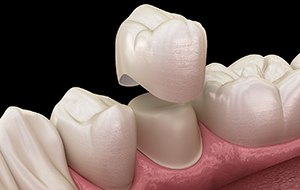
A dental crown is a large filling that fits over a damaged tooth like a cap. It is used to restore teeth with large areas of decay, cracks, or chips.
If you have a tooth that is healthy enough to not require extraction but has too much damage to be repaired with a traditional filling, a dental crown may be an excellent option for you.
Dental crowns can fix teeth with large areas of decay or damage that are too significant for traditional dental fillings, but that are not badly damaged enough to require an extraction.
The Process of Getting a Dental Crown
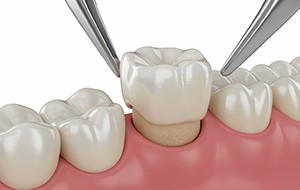
Getting a dental crown is a fairly straightforward process. First, Dr. Olberding will numb your mouth. Once comfortable, he will take impressions of the damaged tooth, and then remove the damaged areas, reshaping it in anticipation of the crown. Once it has been reshaped, you will be fitted with a temporary crown. This prosthetic will not look as detailed as your permanent crown, but it will protect the tooth until the real crown is ready to be attached. Please be aware that you may experience some sensitivity with your temporary crown, but this should clear up when your permanent crown is attached.
Permanent crowns could last 15 or more years and take about two weeks to complete at the dental laboratory. While you wait, you will wear the temporary crown which will keep your tooth safe and allow you to eat a wide variety of foods. Still, it is important that you avoid anything too sticky or crunchy, as these can cause temporary crowns to come loose.
When your permanent crown arrives at Olberding Dental from the laboratory, you will be scheduled to return to have it cemented in place. You should be able to begin using it immediately after your appointment to enjoy a full diet and a complete smile!
Benefits of Getting a Dental Crown

There are many incredible benefits to getting a dental crown. When your tooth has suffered from significant damage, it can make existing oral health problems worse. Dental crowns not only protect your teeth from future damage, but they also offer improved comfort and chewing ability versus damaged or extracted teeth.
Dental crowns are also extremely versatile and can correct a variety of dental problems with just one treatment, including chips, cracks, excessive wear, decay, or other irreversible damage.
Furthermore, because dental crowns are completely customizable, they blend in seamlessly with your existing teeth, making them virtually indistinguishable in your natural smile. They’re also easy to care for, requiring the same brushing and flossing practices you use with your “real” teeth, and with proper use (including avoiding using them to chew anything too hard or sticky), they could even last 15 or more years!
Dental Crowns FAQs
Are Dental Crowns Permanent?
Dental crowns in Lincoln aren’t technically permanent, as they last an average of 5-15 years. (Patients must periodically replace them.) That said, they do make permanent changes to your teeth.
A dentist will reshape your tooth before they place your dental crown. In doing so, they’ll remove bits of enamel – the top layer of your teeth – that won’t grow back. The result is that the treated tooth will always need a protective crown (or a similar restoration) going forward.
Rest assured, the “prep work” for a dental crown won’t harm your smile. The final restoration protects your tooth from further harm, thus compensating for any enamel lost during treatment.
Do Dental Crowns Get Cavities?
Dental crowns can’t (and won’t) get cavities, as they’re made of artificial materials. They don’t wear down from bacterial acids as enamel does.
However, note that a crowned tooth can still suffer from decay. The reason is simple: poor hygiene lets harmful plaque form where a tooth meets its crown. As that plaque builds up, it can travel beneath a crown and harm the underlying tooth.
To keep crowned teeth safe from cavities, you must look after them. Doing so requires twice-daily brushing, once-daily flossing, regular dental checkups, and so on.
Are Dental Crowns Safe for MRI?
Today’s dental crowns are generally safe for MRI machines. Still, their safety ultimately depends on the materials they use.
A crown’s material shapes its effects on an MRI machine. For instance, one made of porcelain won’t cause any disruptions; it’ll let you undergo the imaging process as usual. A metal (or porcelain-fused-to-metal) crown, meanwhile, might interfere with an MRI machine by distorting the latter’s magnetic field.
If you have a metallic crown, tell your dentist, doctor, and MRI technician before your MRI. They can adjust their efforts to ensure the imaging work goes smoothly.
What Happens If You Wait Too Long to Get a Dental Crown?
Overall, a dentist will only suggest a dental crown when you really need one. Waiting too long to get treatment will put your smile at great risk.
Note that an uncrowned tooth is vulnerable to harmful elements. In particular, it’s exposed to chewing forces, food debris, and various kinds of bacteria. Such things will further compromise your tooth if you delay your crown, increasing the risk of pain, infection, and even tooth loss. The damage could even become so severe that you need a root canal or tooth extraction.