
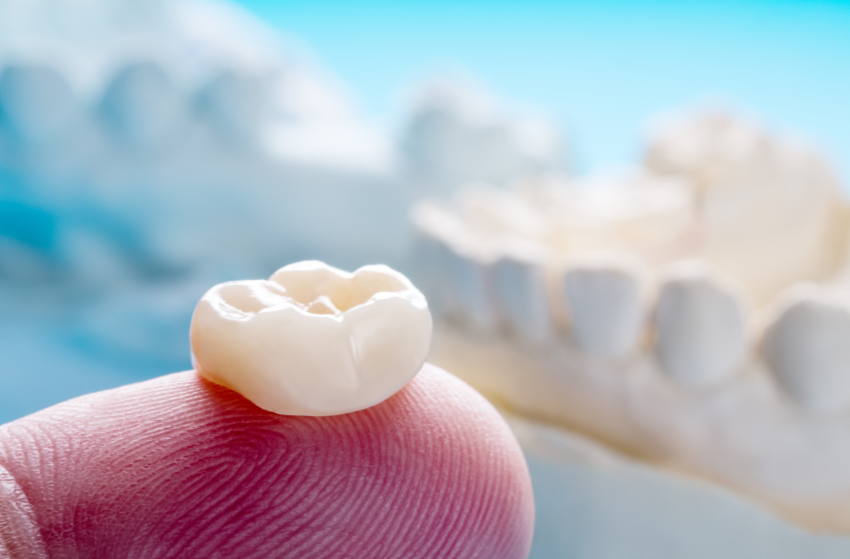
When a tooth becomes severely damaged, it can be easy to take modern dentistry for granted. Today, a dentist may be able to protect a compromised tooth with a dental crown rather than removing it entirely. But that wasn’t always the case.
Dental crowns have a long and fascinating history, evolving from early attempts to replace or cover damaged teeth into precisely designed restorations that can strengthen and protect natural teeth. Here’s a look at how crowns have changed over the centuries.
Early Attempts to Restore Teeth
People have been trying to repair and replace damaged teeth for thousands of years. Some of the earliest known dental restorations are associated with the Etruscans, who lived in what is now Italy. Evidence suggests that they used dental appliances made from materials such as gold and animal teeth as early as around 700 BCE.
Historical evidence isn’t completely consistent about the exact timeline of early dental crowns. Some sources place the earliest examples around 700 BCE, while more extensively documented examples come from later periods, including around 200 AD. Regardless of the precise date, these early restorations demonstrate that people were experimenting with ways to restore damaged or missing teeth long before modern dentistry existed.
Crowns Become More Refined
For much of dental history, extracting a severely damaged or painful tooth was a common solution. There were limited ways to repair teeth that had been weakened by decay, trauma, or other problems.
Over time, dentists developed better techniques and materials for restoring teeth. Gold became an important material for dental restorations because it was durable and relatively workable. As dentistry progressed, other metals and materials were introduced, giving dentists more options for repairing and protecting compromised teeth.
The philosophy of dental treatment also continued to evolve. Instead of simply removing a damaged tooth, dentists increasingly looked for ways to preserve as much healthy natural tooth structure as possible.
The Rise of Modern Dental Materials
The development of modern dental materials dramatically expanded what crowns could accomplish. Porcelain and ceramic materials offered a more natural-looking alternative to traditional metal restorations, while advances in dental alloys provided strength and durability.
Later developments combined different materials to balance appearance and function. Today, crowns may be made from several types of ceramic, porcelain, metal, or combinations of materials, depending on the location of the tooth and the patient’s individual needs.
Digital Dentistry Changes the Process
The technology used to create crowns has also transformed. Traditional crown fabrication involved physical impressions and laboratory techniques that required considerable precision.
Modern dentistry can incorporate digital scanning, computer-aided design, and computer-aided manufacturing to create highly precise restorations. These technologies allow dental professionals to plan restorations digitally and produce crowns designed to fit a patient’s individual smile.
Preserving the Natural Smile
The history of dental crowns reflects a much larger transformation in dentistry: the shift toward preserving natural teeth whenever possible. Rather than automatically extracting a compromised tooth, dentists now have restorative options designed to reinforce and protect teeth that might otherwise be lost.
Modern crowns are the result of centuries of experimentation, innovation, and advances in dental science—and they continue to evolve alongside the technology used to create them.
Preserving a natural tooth can be a remarkable achievement of modern dentistry.
About the Practice
Olberding Dental provides comprehensive dental care in Lincoln, Nebraska, including restorative treatments such as dental crowns and bridges. Dr. Louis Olberding, DDS, focuses on comprehensive, personalized treatment and has extensive experience treating complex dental cases. He earned his DDS from the University of Nebraska Medical Center College of Dentistry and has pursued advanced education through the Misch International Implant Institute, Dawson Academy, and Spear Education, where he also serves as a visiting faculty member.
Call us at (402) 488-2325 or schedule your appointment online